Impacted Members/Scientists: Request a membership waiver, seek meeting support, and other resources. Learn more. For the latest public policy updates, please visit this page.




Lancelot M. Berkeley − New York Community Trust Prize for Meritorious Work in Astronomy
The Lancelot M. Berkeley – New York Community Trust Prize for Meritorious Work in Astronomy (the Lancelot Berkeley Prize) is awarded annually for highly meritorious work in advancing the science of astronomy during the previous year. The prize includes a monetary award (split equally among the recipients) plus travel expenses to attend an AAS meeting in the next 12 months to present a prize lecture.

2026 - Dark Energy Spectroscopic Instrument (DESI) Collaboration
For their work creating the largest 3D map of the universe, enabling the study of the effects of dark energy over cosmic time.

2025 - Astropy Collaboration
For their work developing and maintaining this code base, which provides underlying support for much of astronomy research as it is conducted today.

2024 - Wen-fai Fong
For her leadership of foundational work that is greatly advancing our understanding of explosive astrophysical transients and their host galaxies.
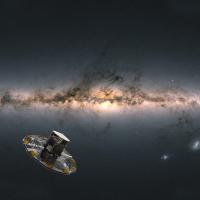
2023 - Gaia Collaboration
For enabling a transformative, multidimensional map of the Milky Way. Since its launch in 2013, the ESA’s Gaia space telescope has recorded stellar positions, distances, colors, and proper motions for nearly two billion stars in our galaxy.
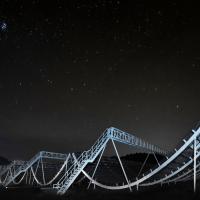
2022 - CHIME/FRB team
For its dramatic progress on understanding fast radio bursts — brief and powerful flashes of radio waves with enigmatic origins — using observations from the CHIME radio telescope in British Columbia.

2021 - Sherry H. Suyu
For her leadership of the H0LiCOW collaboration, which is measuring the cosmic expansion rate using gravitationally lensed quasars.

2020 - Sheperd S. Doeleman
For his scientific contributions to, and his leadership of, the Event Horizon Telescope, a planet-scale array of ground-based radio telescopes stretching from Hawaii to Europe and from Greenland to the South Pole.

2019 – Elena Aprile
For her leadership of the XENON project and its groundbreaking search for the particle that is thought to make up the dark matter in the halo of the Milky Way Galaxy.
2018 – Dennis Coyne
Co-awarded for his leadership role in the development of the Advanced LIGO detectors, which have opened a new window on the universe.
2018 – Peter Fritschel
Co-awarded for his leadership role in the development of the Advanced LIGO detectors, which have opened a new window on the universe.
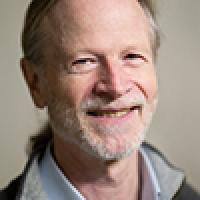
2018 – David Shoemaker
Co-awarded for his leadership role in the development of the Advanced LIGO detectors, which have opened a new window on the universe.
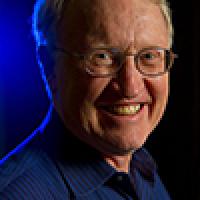
2017 – Garth Illingworth
For his major research programs using innovative tools and techniques to investigate the formation, history, evolution, and nature of the most distant and earliest galaxies.

2016 – Jan Tauber
For helping to lead the Planck mission to its groundbreaking success in delivering detailed maps of the cosmic microwave background and precise values of key cosmological parameters.
| Year | Recipient(s) | Citation |
|---|---|---|
| 2015 | David Weinberg | For his paper "The Baryon Oscillation Spectroscopic Survey of SDSS-III," written with numerous coauthors and published in the Astronomical Journal in 2013. |
| 2014 | James Lemen | Dr. James Lemen was the leader in the design and construction of the Atmospheric Imaging Assembly for the Solar Dynamics Observatory, which has enabled forefront advances into understanding of solar activity. He is awarded the Berkeley Prize for his widely cited paper entitled “The Atmospheric Imaging Assembly on the Solar Dynamics Observatory.” |
| 2013 | Eiichiro Komatsu | For advancing the field of cosmology by using a combination of 7 years of WMAP data together with distances from baryon acoustic oscillations and H0 to place new constraints on the Standard LambdaCDM model. This work was published in 2011, ApJS, 192, 18 with 20 co-authors and was the most highly cited astronomy paper in 2012. |
| 2012 | Linda J. Tacconi | For her work on cold gas in massive star-forming galaxies in the young universe. |
| 2011 | William J. Borucki & David G. Koch | For the discovery of new worlds and for taking a major step in determining the extent of life in our galaxy. |